
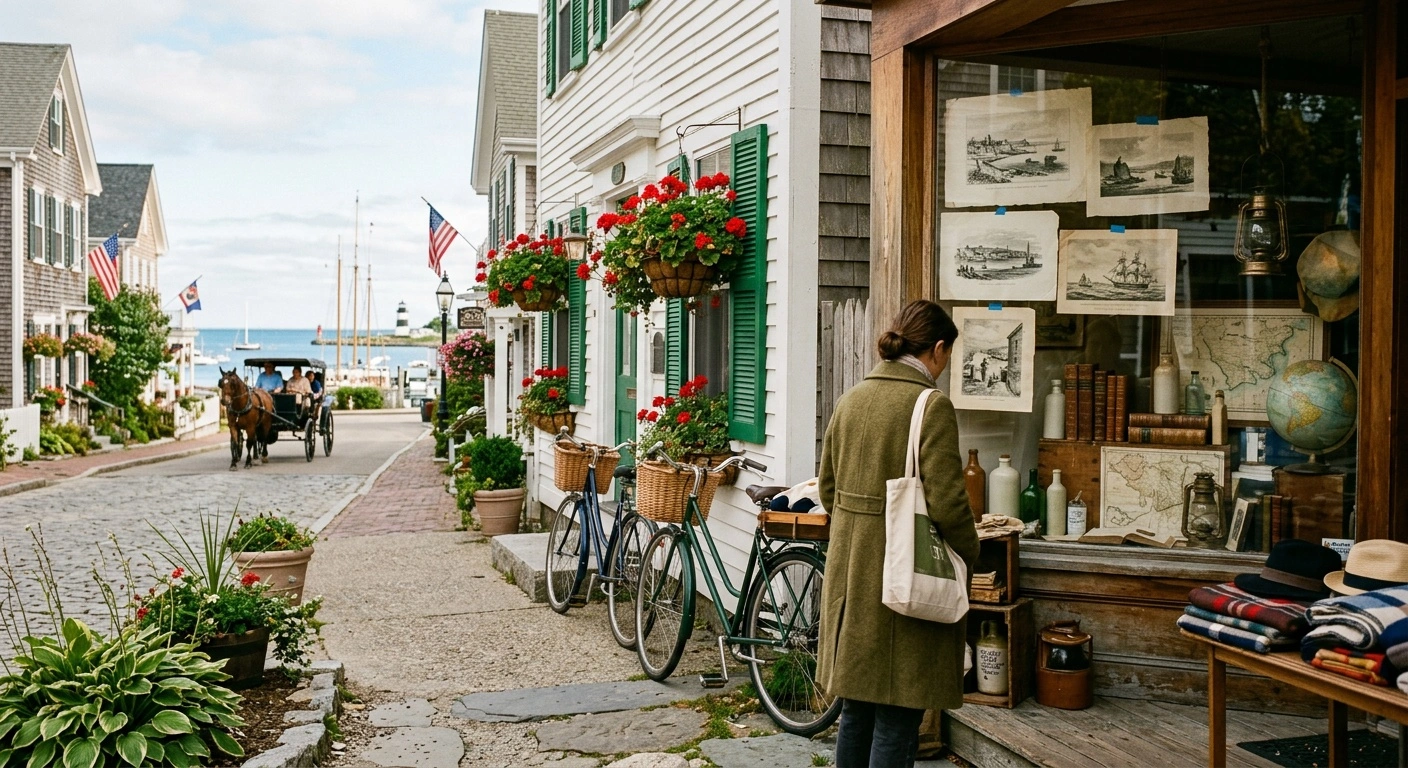
Mackinac Island antique shops are fewer than many visitors expect. The island has no established antiques district or long list of dedicated dealers. Downtown stores focus mainly on gifts, clothing, art, books, fudge, and Mackinac souvenirs.
You may find vintage pieces, older books, historic prints, or secondhand decorations mixed with new merchandise. However, the selection changes often and may sell quickly. Come prepared to browse rather than search for a specific antique.
You also do not need to reserve several hours for antiquing alone. Most downtown stores sit along Main Street and Market Street, within a two- to ten-minute walk of the ferry docks. A focused shopper can make a first pass in about an hour.
Allow half a day if you also plan to visit galleries, bookstores, and historic sites. Serious collectors should schedule time on the mainland, where a broader antiques search is more practical.
What to Expect From Mackinac Island Antique Shops
Most antique shopping on the island involves occasional finds inside general retail stores. Limited commercial space and a seasonal economy make a large, year-round antique warehouse impractical.
Small objects that fit easily on a passenger ferry are the most likely finds. Look for framed images, old books, postcards, decorative pieces, and island-related collectibles. None of these categories is guaranteed on any given visit.
Inventory changes throughout the season. A store that carried several vintage objects in June may have none left by August. Ask whether an item is genuinely old, a later reproduction, or simply designed to look vintage.
That distinction matters because local retailers use historic Mackinac imagery on plenty of new merchandise. Prices vary widely, so consider condition, provenance, and transportation before buying.
Where to Start Looking Downtown
Begin on Main Street near the ferry docks. Walk the downtown blocks slowly instead of relying on store names, since older pieces may appear among new goods. Some sellers do not advertise themselves as antique dealers.
Next, turn onto Market Street, where the quieter setting makes window-shopping and conversation easier. The streets lie close together, so you will not need a bicycle for this short shopping route.
Mackinac Island restricts private motor vehicles, which means you cannot drive between stores or load purchases into a parked car. Walking works best downtown. Bicycle traffic and horse-drawn carriages can make sudden stops unsafe.
Park rental bicycles only in designated areas. Keep storefronts, porch entrances, and carriage routes clear. Before buying anything fragile or bulky, decide how you will carry or ship it.
Use General Shops as Leads, Not Guaranteed Antique Dealers
The Island Bookstore serves readers interested in Mackinac Island and Great Lakes subjects. However, it is not a dedicated antiquarian bookseller. Its local-history titles can help you understand the buildings, military sites, transportation, and images represented on older objects.
Most visitor-focused businesses operate primarily from late spring through fall. Confirm current hours before making a special trip. Also, remember that a historical subject does not make a book antique.
Artists Market of Mackinac Island features art and handcrafted work rather than antiques. It offers another way to buy island-related pieces without uncertain claims about age. Its hours and availability may change outside the main visitor season.
Both stores can add variety to a downtown shopping walk. Neither represents a conventional antiques district.
How to Tell an Antique From a Reproduction
Mackinac Island’s Victorian appearance can make newly manufactured objects seem older than they are. A Fort Mackinac print, hotel image, or reproduction ferry poster may look historic without having much age.
Examine the back, edges, fasteners, paper, frame construction, and manufacturer details. Artificial wear, stained paper, and distressed paint do not prove age.
Ask the seller whether the piece is antique, vintage, reproduced, or newly made from an older design. If its value depends on a particular building, family, hotel, ferry company, or military site, request documentation.
A good story can add interest, but it does not establish provenance. If certainty matters, ask permission to photograph the object and its identifying marks. Research those details before you pay.
Questions to Ask Before You Buy
- How old is the item believed to be? Ask whether the seller has documentation or is estimating the date.
- Is it original or reproduced? Many historic-looking Mackinac images come from modern editions.
- Has anyone repaired or restored it? Repairs may be acceptable, but they should affect the description and price.
- Does it have island provenance? A Mackinac subject does not prove that someone made or used the object on the island.
- Can the seller pack it for the ferry? Ask for protective wrapping and a sturdy box.
- What is the return policy? Seasonal stores may follow different procedures after their physical locations close.
These questions help when evaluating photographs, prints, books, ceramics, and hotel-style decorations. Inspect paper for foxing, glass for cracks, and frames for loose corners. Dim lighting can hide damage.
On metal pieces, look for active corrosion instead of assuming every dark surface has desirable patina. Check textiles for odors and stains, which may matter more than minor wear.
Use extra caution with objects described as Native American artifacts, military relics, archaeological finds, or pieces removed from historic buildings. Legal ownership and accurate attribution matter more than a dramatic sales story.
Never remove objects from Mackinac Island State Park, shorelines, historic buildings, archaeological areas, or cemetery grounds. If a claim sounds unusually important, wait until an independent source can verify it.
Historic Stops That Add Context
Fort Mackinac provides useful context for military objects and island imagery. Mackinac State Historic Parks operates the fort seasonally and charges admission. Check current dates and hours before visiting.
The fort sits above downtown. Although the map distance looks short, the uphill walk, stairs, and sloping approaches require extra time. Its exhibits can help you recognize uniforms, architectural details, and historical periods, but staff members do not provide appraisal services.
The Richard and Jane Manoogian Mackinac Art Museum occupies the historic Indian Dormitory near Marquette Park. This seasonal Mackinac State Historic Parks site explains how artists have depicted the island. Confirm current admission arrangements and opening dates.
The museum does not sell pieces from its collection. Still, viewing documented works can help you distinguish historical art from contemporary work in an older style.
Walk the Historic Landscape Before Buying Memorabilia
Marquette Park, Ste. Anne’s Church, Mission Point, and the downtown streetscape can help you place old images in context. Marquette Park sits below Fort Mackinac and is free to enter. Nearby museums and interior attractions may charge admission.
Ste. Anne’s Church stands east of downtown along the waterfront route. Respect worship services and posted access limits. Mission Point lies farther east but remains within a comfortable walk or bicycle ride of the ferry area.
When examining old images, compare rooflines, docks, shoreline features, and the position of Round Island Lighthouse. These landmarks may help confirm that an image shows Mackinac Island rather than a general Great Lakes scene.
Landscape comparison cannot establish an exact date or ownership history. Treat it as one clue, not final authentication.
Getting an Antique Purchase Off the Island
Carry small purchases onto the passenger ferry in a rigid box or padded bag. Ferries connect Mackinac Island with Mackinaw City and St. Ignace during the primary visitor season. Schedules change with the month, weather, and passenger demand.
Confirm the final departure before spending the late afternoon shopping. If you miss it, you may need an unplanned overnight stay. Lodging can be expensive or unavailable during busy periods.
For overnight visits, porters and horse-drawn drays usually move luggage between the ferry dock and lodging. Ask how staff will handle your bags before placing a fragile object inside checked luggage.
Keep small breakable items with you and protect the corners of framed pieces. For larger purchases, discuss packing and shipping with the seller before completing the sale.
Plan for Walking, Bicycles, and Horse Traffic
Mackinac Island has restricted private motor vehicles since 1898, with limited exceptions for emergency and service vehicles. As a result, the island offers no conventional curbside pickup. Visitors travel downtown by foot, bicycle, carriage, or horse-drawn taxi.
A framed print may be easy to carry on foot but unsafe to hold while steering a bicycle. Horse-drawn taxis can help with personal transportation. However, they do not replace professional packing or freight service.
Keep purchases nearby while waiting at the ferry dock. Passenger lines and luggage carts create constant movement. Label each box with your name and mainland destination, using more than a loose paper tag.
Add a waterproof outer layer when rain is possible. Ferry docks and carriage loading areas do not provide complete shelter, and Lake Huron weather can change quickly.
When to Shop During the Island Season
Visitors usually find the broadest retail selection from late spring through early fall. Summer brings more open stores, but it also creates heavier foot traffic and less room to inspect delicate pieces.
Weekday mornings often feel calmer than midday, when ferry arrivals send larger groups downtown. Late afternoon can also be quiet. Keep the return ferry schedule in view.
Most Mackinac Island businesses close or reduce their hours from roughly late October through early May. Winter ferry access is limited and weather-dependent, while only a small year-round community remains.
Do not plan a winter antiquing trip without contacting the places you want to visit. Even during May and October, stores may open for shorter hours or close on selected days.
| Season | What shopping is like | What to plan around |
|---|---|---|
| Early May | Some visitor businesses begin reopening, but hours and selection may remain limited. | Confirm individual opening dates before taking the ferry. |
| Late spring and early summer | Most seasonal retailers operate, and crowds grow as summer approaches. | Shop in the morning for more room to browse. |
| Peak summer | The largest number of stores usually opens, while downtown reaches its busiest period. | Watch bicycle traffic and allow extra time for ferry lines. |
| Early fall | Crowds ease, and many seasonal businesses continue operating. | Expect shorter hours as the season progresses. |
| Late fall through early spring | Most visitor-oriented retail closes or operates on a limited schedule. | Verify openings directly before traveling to shop. |
Better Options for Serious Antique Shoppers
If you want several dedicated dealers, large furniture, or hours of comparison shopping, search on the mainland. Mackinaw City and St. Ignace serve as the main ferry departure points. A car also makes a regional antiques search easier.
Business openings and inventory change, so consult current listings rather than an old printed guide. Leave large mainland purchases secured in your vehicle instead of carrying them across Lake Huron.
A typical island day begins at a mainland ferry facility. Park, board as a foot passenger, and explore downtown on foot after arrival. Ferry parking terms vary by operator, lot, and season, so review them while purchasing tickets.
For overnight stays, tag luggage as directed and let ferry and lodging porters coordinate delivery. Keep identification, medication, valuables, and fragile purchases in your personal bag.
Build a Mackinac History Shopping Day
Combine browsing with sites that explain the island’s history. Start downtown soon after your ferry arrives, then check Main Street and Market Street. Continue to Marquette Park after your first shopping pass.
Visit Fort Mackinac for deeper historical context, allowing time for admission and the uphill approach. Afterward, tour the art museum when open or walk east toward Ste. Anne’s Church and Mission Point.
This route makes better use of the day than repeatedly searching for stores that may not carry antiques. It also leaves time for lunch, the waterfront, and a final downtown pass before your ferry.
Even if you find nothing old, you will see many places represented in island artwork and memorabilia. For most visitors, that offers more value than treating Mackinac Island as a dedicated antiques destination.
Plan Around Mackinac Island’s Seasonal Retail Scene
Treat visits to Mackinac Island antique shops as a possible addition to your day, not its sole purpose. Browse carefully, ask direct questions about age and provenance, and walk away from unsupported claims.
Bookstores, art shops, and general retailers can still be worthwhile stops. Just do not confuse new work with genuine antiques. The island’s historic setting provides its strongest advantage for collectors and curious shoppers.
Before leaving the mainland, confirm ferry departures, attraction schedules, store hours, and the weather forecast. Pack a padded tote for small breakable objects and arrange proper shipping for anything larger.
Serious collectors should reserve separate mainland time for a wider selection. On the island, plan around Fort Mackinac, historic downtown, and your ferry home. Treat any authentic vintage find as a welcome extra.